Nano-Hydroxyapatite vs. Fluoride: Which Is Truly Superior for Tooth Enamel?
A clinical look at why biomimetic dentistry is transitioning from traditional sodium fluoride to biocompatible 7.5% Nano-Hydroxyapatite (nHAp) for permanent enamel regeneration.
“For over seven decades, fluoride has remained the undisputed king of cavity prevention. However, advancements in biomimetic materials science have introduced an alternative that does not merely slow down decay, but physically rebuilds your tooth's native structure: Nano-Hydroxyapatite (nHAp).”
1. The Biological Difference: Surface Coating vs. True Tissue Integration
Your tooth enamel is remarkably composed of 97% Hydroxyapatite, a crystal lattice of calcium and phosphate. When acids attack your teeth, they leach out these exact minerals.
Traditional fluoride does not replenish lost enamel. Instead, it reacts with trace salivary calcium on the outermost surface to form a microscopic layer of fluorapatite. While acid-resistant, it does not restore lost enamel volume.
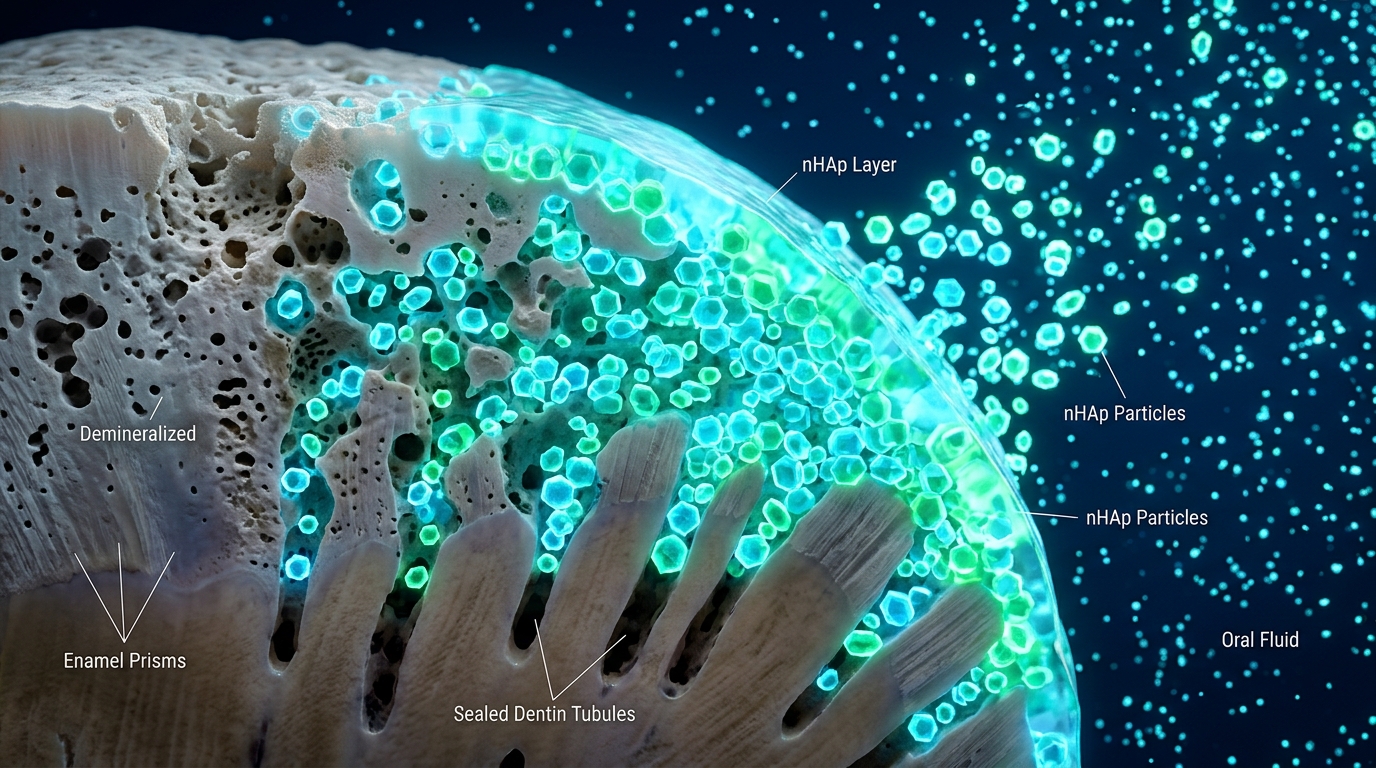
Nano-Hydroxyapatite (nHAp), in contrast, consists of identical 20-50 nanometer particles of the exact mineral your teeth are built of. When brushed onto teeth, these nano-crystals integrate directly into microscopic enamel pores, remineralizing the tooth throughout its lesions.
2. The Safety Paradigm: 100% Non-Toxic & Safe If Swallowed
Every commercial tube of fluoride toothpaste comes with a mandated poison control warning: 'If more than used for brushing is accidentally swallowed, get medical help or contact a Poison Control Center immediately.'
This makes fluoride especially hazardous for toddlers, children with developing teeth (who face dental fluorosis risks), and pregnant women.
Nano-Hydroxyapatite is completely biocompatible. Because it is made of natural calcium and phosphate, it is 100% non-toxic if swallowed. There are zero poison warnings, zero fluorosis risks, and absolute peace of mind for the entire household.
3. Sensitivity Relief: Occluding Exposed Dentin Tubules
Fluoride sensitive toothpastes typically depend on potassium nitrate to temporarily desensitize or numb nerve endings inside the tooth.
Nano-Hydroxyapatite works mechanically: because its particles are smaller than the diameter of open dentin tubules, it physically plugs and seals the microscopic pathways leading to your nerves. Cold, hot, and sweet triggers cannot reach the pulp, curing sensitivity at the root cause.
Conclusion & Key Recommendations
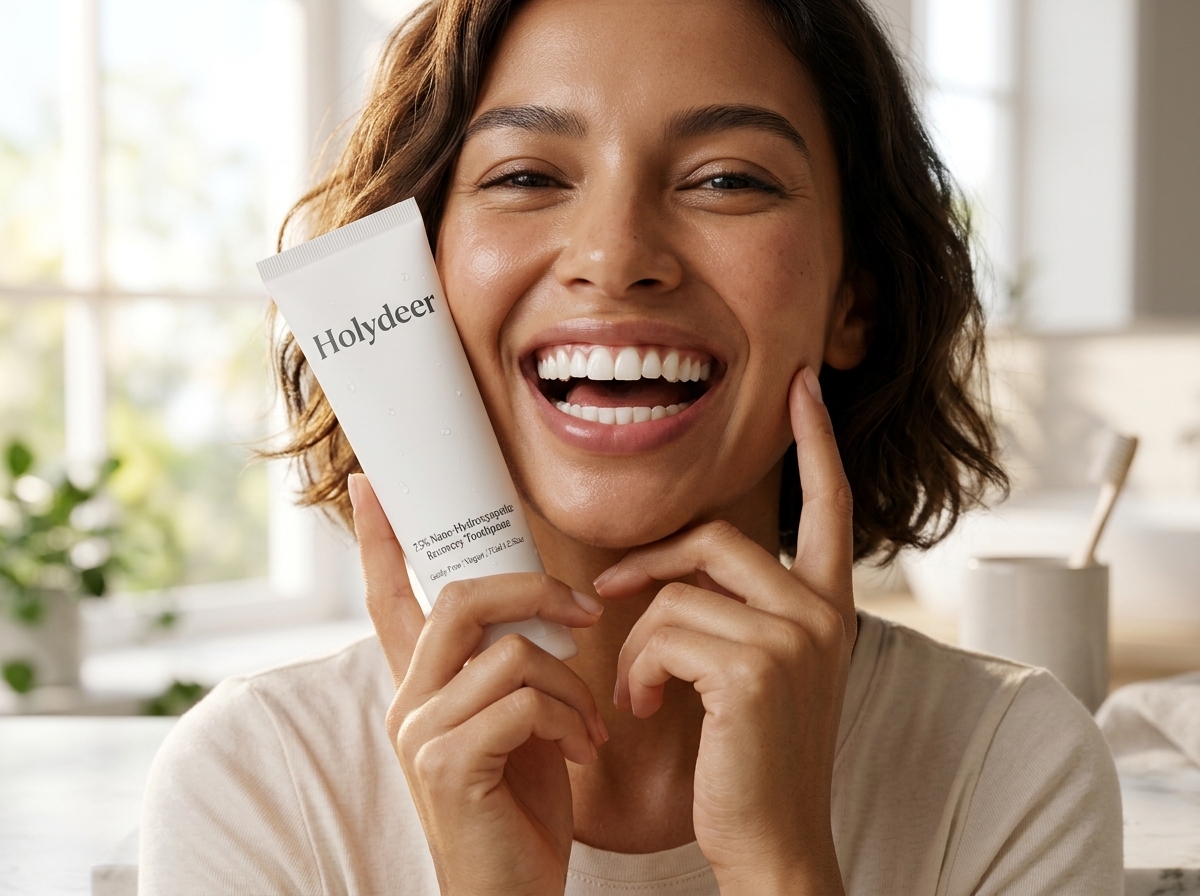
While fluoride played a historic role in 20th-century public health, 21st-century bio-dentistry belongs to Nano-Hydroxyapatite. Products like Holydeer Recovery Toothpaste provide the optimal 7.5% clinical concentration to safeguard your teeth without chemical trade-offs.
Holydeer™ Recovery Toothpaste (7.5% nHAp)
Start rebuilding your tooth enamel today. No complicated cart or checkout needed — order directly on the product page with 100% Cash on Delivery across Pakistan.